
Why Ranking #1 Doesn’t Guarantee Clicks for Law Firms
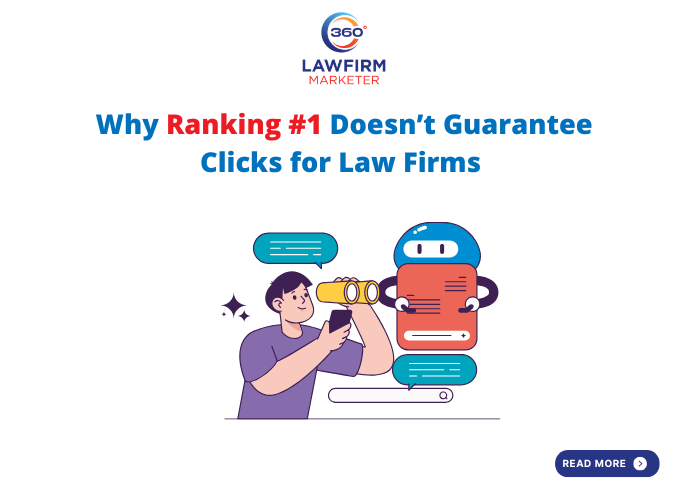
Working with a law firm marketing agency New York can help firms improve their online visibility, but appearing at the top of Google is only one part of a successful digital strategy. A law firm may achieve a first-page or even first-position ranking and still receive fewer website visitors than expected. The reason is simple: rankings create visibility, but they do not automatically persuade people to click. Searchers compare titles, descriptions, brands, reviews, and other search features before deciding which result deserves their attention. For law firms competing for high-value legal searches, improving organic click-through rate (CTR) can be just as important as improving rankings.
Another important part of building visibility is social media for lawyers New York, which can strengthen brand recognition and give potential clients more opportunities to become familiar with a firm before they perform a Google search. When people recognize a firm’s name, understand its services, and see useful content from the firm, they may be more likely to click its search result. This demonstrates why SEO should not operate in isolation. Search visibility, branding, content, reputation, and user experience can all influence whether an impression eventually becomes a website visit or consultation.
What Does Organic CTR Mean for Law Firms?
Organic click-through rate measures the percentage of users who click a search result after seeing it. For example, if a legal services page receives 1,000 impressions and generates 50 clicks, its organic CTR is 5%.
CTR provides valuable information because impressions alone do not tell you whether your search listing is attracting potential clients. A page can generate thousands of impressions while receiving relatively few visits.
For a law firm, this difference matters. A ranking may create an opportunity, but the search listing needs to communicate enough value to encourage the prospective client to take the next step.
Why a #1 Ranking May Still Produce Few Clicks
Search engine results pages have changed significantly. Google no longer displays only traditional organic links. Depending on the query, users may encounter advertisements, local results, featured snippets, People Also Ask sections, videos, images, and AI-generated search features.
These elements can push organic listings lower on the page or provide users with information before they click a website.
For example, someone searching for a general legal question may find an answer directly in the search results. They may not need to visit a law firm’s website immediately.
On the other hand, someone searching for a specific legal service in their area may be more likely to visit several websites, compare firms, read reviews, and contact an attorney.
This means law firms should evaluate CTR according to the search intent behind each keyword, rather than assuming every #1 ranking should produce the same number of clicks.
Search Intent Can Influence Clicks
Understanding what a searcher actually wants is essential.
Informational searches generally involve people looking for explanations, definitions, or answers. These searches can experience lower CTR because search engines increasingly provide answers directly in search results.
Commercial and transactional searches are different. A person searching for a lawyer or a specific legal service is often closer to taking action. They may want to compare attorneys, learn about experience, review practice areas, or request a consultation.
Law firms should therefore create titles and descriptions that match the intent behind each search.
A page designed to answer a legal question should clearly promise useful information. A service page should communicate the service, location, value, and next step.
Improve Title Tags to Encourage Clicks
The title tag is one of the most important elements law firms can optimize for CTR.
A generic title such as:
Personal Injury Lawyer | ABC Law Firm
may communicate the basic topic, but it does not necessarily provide a strong reason to click.
A stronger title might communicate a benefit or specific value proposition while remaining natural and relevant to the search query.
The goal isn’t to fill the title with keywords. Instead, the title should quickly answer three questions:
- What is this page about?
- Who is it for?
- Why should I click?
Titles should also be reviewed on mobile devices because limited screen space can cause important information to be truncated.
Write Better Meta Descriptions
Meta descriptions provide another opportunity to influence search behavior.
Although Google may sometimes generate a different snippet, writing a useful description gives the search engine a strong starting point.
For law firms, an effective description can explain the service, highlight the firm’s value, and encourage the user to learn more.
For example, instead of simply writing:
“Learn about our legal services and contact our firm.”
a stronger description could communicate what the prospective client will find, such as information about the firm’s practice area, experience, service location, and consultation options.
The description should sound helpful rather than promotional or overly repetitive.
Your Website Experience Still Matters
Getting the click is only the beginning. If a prospective client arrives at a slow, confusing, outdated, or difficult-to-navigate website, the traffic generated through SEO may not result in a lead.
This is where law firm website design New York becomes an important part of the broader marketing strategy. A professional website should make it easy for visitors to understand the firm’s practice areas, attorneys, experience, location, and available next steps.
Important elements can include:
- Clear navigation
- Mobile-friendly layouts
- Fast-loading pages
- Strong calls to action
- Easy-to-find contact information
- Attorney biographies
- Practice-area pages
- Client-focused content
- Trust-building elements
A strong website connects search visibility with conversion. It gives visitors a reason to stay after they click.
Use Search Console to Find CTR Opportunities
Google Search Console can help law firms identify pages that receive impressions but do not generate enough clicks.
Look for pages with:
- High impressions
- Strong average rankings
- Low CTR
- Valuable commercial keywords
These pages may already have good SEO foundations. Instead of starting from scratch, marketers can test improvements to titles, descriptions, and page messaging.
For example, if a page consistently ranks among the top results but has a weak CTR, changing its title to make the benefit clearer could potentially improve its performance.
Don’t Ignore Brand Recognition
People do not always choose search results based solely on position.
Brand familiarity can influence their decision. A person who has previously seen a firm’s videos, articles, social content, reviews, or other online materials may recognize the firm’s name when it appears in Google.
This is why law firm marketing should work across multiple channels. SEO can capture search demand, while content and social platforms can help build familiarity and trust.
Measure More Than Rankings
Rankings remain an important SEO metric, but they should not be treated as the final measure of success.
Law firms should also monitor:
- Organic impressions
- Organic clicks
- CTR
- Search positions
- Website engagement
- Contact-form submissions
- Phone calls
- Consultation requests
- Qualified leads
The ultimate objective is not simply to occupy position one. The objective is to turn visibility into meaningful interactions and, ultimately, new business.
Final Thoughts
A high Google ranking gives a law firm an important competitive advantage, but visibility alone does not guarantee results. Searchers still decide which result to click based on relevance, messaging, brand familiarity, search features, and perceived value.
Law firms that want stronger organic performance should look beyond rankings and regularly evaluate their CTR. Optimizing title tags, meta descriptions, search intent, structured data, branding, and website experience can make valuable search impressions more productive.
The most effective SEO strategy is therefore not simply about ranking higher. It is about becoming the result that potential clients want to click and creating a website experience that encourages them to take the next step.