
Neuromarketing for Law Firms: How to Win Clients by Understanding How They Decide
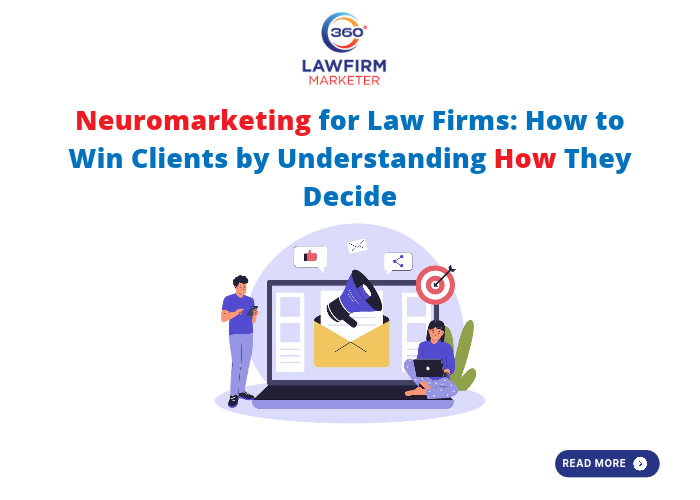
When someone searches for a lawyer, they are rarely relaxed. They may be facing an injury, a divorce, a denied claim, or a business dispute, and their emotions are running high. In that state, people don’t compare firms with cool logic. They choose the one that feels safest. Understanding that reality is the heart of neuromarketing, and any law firm marketing agency New York attorneys hire should know how to use it.
Neuromarketing applies neuroscience and behavioral psychology to marketing. You don’t need brain scanners to benefit, because decades of published research already explain how people process messages, build trust, and take action. The strongest Law Firm Lead Generation Companies New York offers use these findings to turn anonymous visitors into real consultations. Below are three frameworks worth knowing, followed by practical ways to apply them.
Framework 1: Fast and Slow Thinking
Psychologist Daniel Kahneman described two modes of thought: a fast, emotional, instinctive mode and a slow, analytical one. Most decisions happen in the fast mode, long before careful reasoning begins. For a law firm, this means your marketing must first answer an emotional question: will this person care about me and handle my problem well? Explanations of legal procedure come second. Present your firm as a trusted, approachable member of the community rather than an intimidating expert. Credentials, verdicts, and technical knowledge still matter, but they work best as proof that supports a feeling of confidence.
Framework 2: The Pyramid of Trust
The Nielsen Norman Group’s Pyramid of Trust shows that people extend commitment in stages. A first impression forms in a fraction of a second. Sharing a phone number requires more trust, and sharing sensitive case details requires far more. Many prospects hesitate simply because your marketing asks for more trust than you have earned so far. The solution is to picture where a visitor likely sits on the pyramid and match your request to that level. A first-time visitor might be offered a helpful guide, while someone who has seen your television spot, read your articles, and returned to your website is ready for a direct call-now prompt. Each touchpoint should lift the prospect one step higher.
Framework 3: The Persuasion Slide
Roger Dooley’s Persuasion Slide describes the final stretch of a decision. A person may have a genuine problem and genuine trust in you, yet still stall. They need a nudge down the slide. That nudge might be a clear call-to-action button, a reassuring line such as “free, confidential consultation,” or a shorter contact form. Audit your pages for remaining friction, such as confusing menus, slow loading, or vague next steps, and remove each obstacle one by one.
Applying Neuromarketing to Your Digital Presence
Design
People judge within moments whether a page is relevant. If someone searches for a workers’ compensation lawyer in Brooklyn, your headline should say exactly that, in large, readable type. Try the five-second test: show a stranger your page briefly, then ask what it is about. If they cannot tell, your prospects cannot either. Typography matters as well. Research suggests that hard-to-read fonts make a task feel harder, and that feeling transfers to your service. Clean, legible type makes hiring you feel easy.
Copy
Humans are wired for stories. A realistic client scenario, told simply, helps prospects picture themselves receiving help. Keep the language plain, because research suggests simple wording makes writers seem more intelligent and makes a decision feel less risky. Replace “pursuant to statutory remedies” with “how we can help you recover what you are owed.” Plain words lower resistance, and lower resistance means more calls.
Campaign Strategy
Three principles deserve attention. First, frequency: seeing your firm repeatedly builds familiarity, and familiarity builds trust. Consistent ads and content across channels raise the odds that someone chooses you when the need becomes urgent. Second, reciprocity: when people receive something of value, they feel inclined to give something back. Free guides, clear FAQs, and no-cost initial consultations create goodwill before any sale is attempted. Third, priming: sharing your story and values before asking for the case shapes how prospects view you. In a well-known political focus-group example, people who learned a candidate’s background before watching him speak rated him more qualified than those who saw the speech first. Lead with your story, then ask for the call.
Build Trust Signals Into Every Page
Trust grows through small, visible proof. Place client testimonials, case results, bar association memberships, and real photos of your attorneys near every call-to-action, wherever your state’s advertising rules allow. Stock photography can quietly signal that you have something to hide, while genuine faces suggest transparency. Display your phone number prominently and make it tappable on mobile, because many prospects will call during a stressful moment. Add a short line explaining what happens after they reach out, such as “You’ll hear from our team within one business day.” Predictability reduces anxiety, and less anxiety makes contacting you feel safer. Finally, respond quickly, because a prospect who waits hours for a reply often moves on to the next firm.
A Note of Caution
Neuromarketing is a young field, and some famous psychology findings have proven difficult to replicate. Treat these ideas as informed hypotheses, not guarantees. Test them against your own data, such as call volume, form completions, and the quality of intakes. Remember too that legal advertising is governed by bar rules and your audience is often vulnerable, so persuasion must always be honest, respectful, and compliant.
Putting It All Together
Every principle above eventually lands on your website, where trust is won or lost. Strong Website Design For Lawyers New York prospects can trust should load quickly, mirror what searchers want, use readable typography, tell a credible story, and present one clear next step. Pair that with genuinely useful content, and your site becomes a steady source of qualified inquiries rather than a digital brochure.
The firms that grow fastest are not necessarily the loudest. They understand that clients decide with emotion first and logic second, and they build marketing that respects both. Start with one change this week, then measure the result and keep refining.